3 August 2026 · Marine Boys
Fire Resistant vs Flame Retardant Marine Cables: What's the Difference?
Fire resistant and flame retardant marine cables perform different safety functions. Learn which cable is required for emergency systems and general shipboard installations.
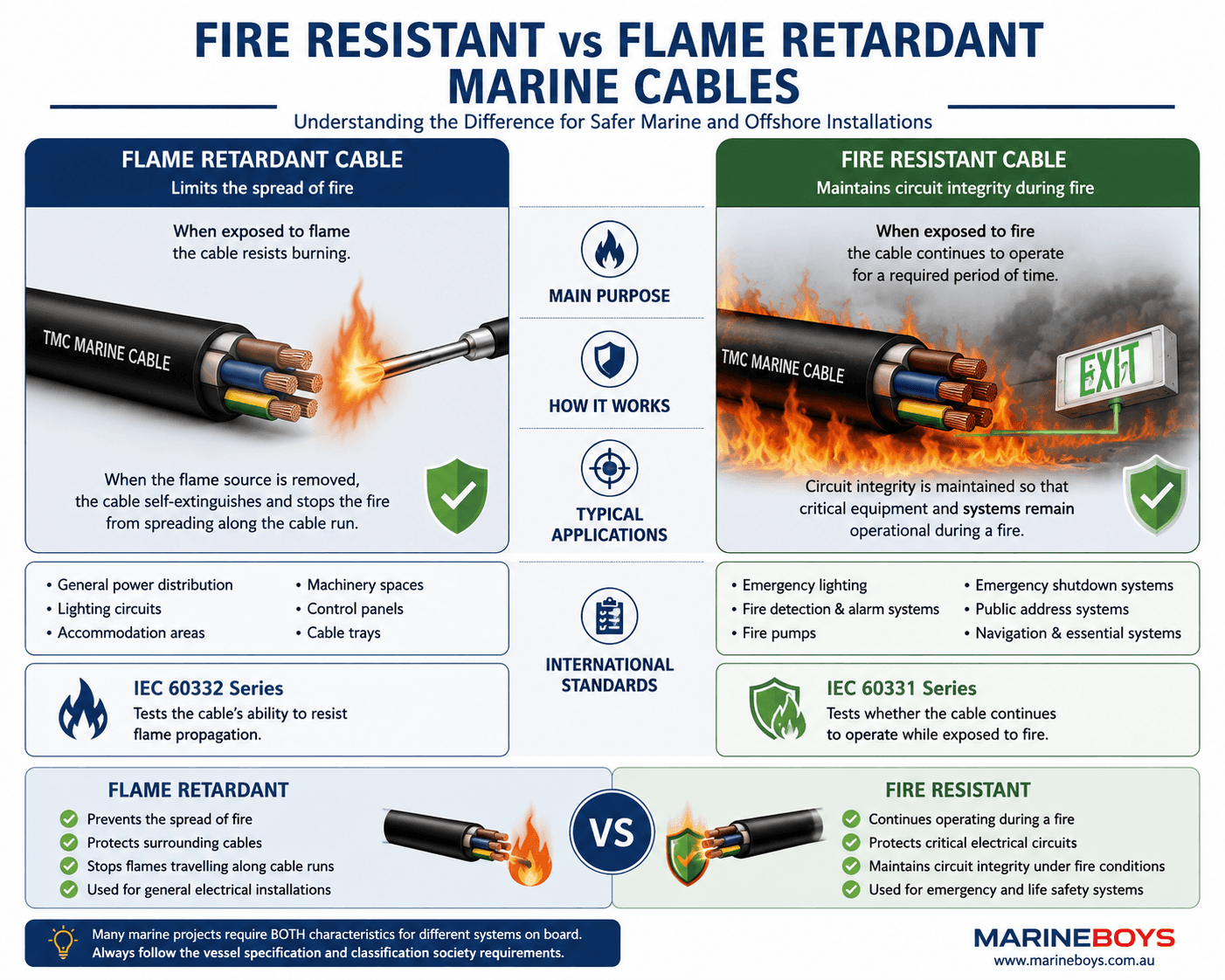
Understanding the Difference for Safer Marine and Offshore Installations
When specifying electrical cables for ships or offshore platforms, the terms fire resistant and flame retardant are often used interchangeably. Although they sound similar, they serve different purposes and are tested against different international standards.
Choosing the wrong cable can affect the safety and reliability of critical onboard systems during a fire. This article explains the key differences and helps you select the right cable for your marine application.
What Is a Flame Retardant Marine Cable?
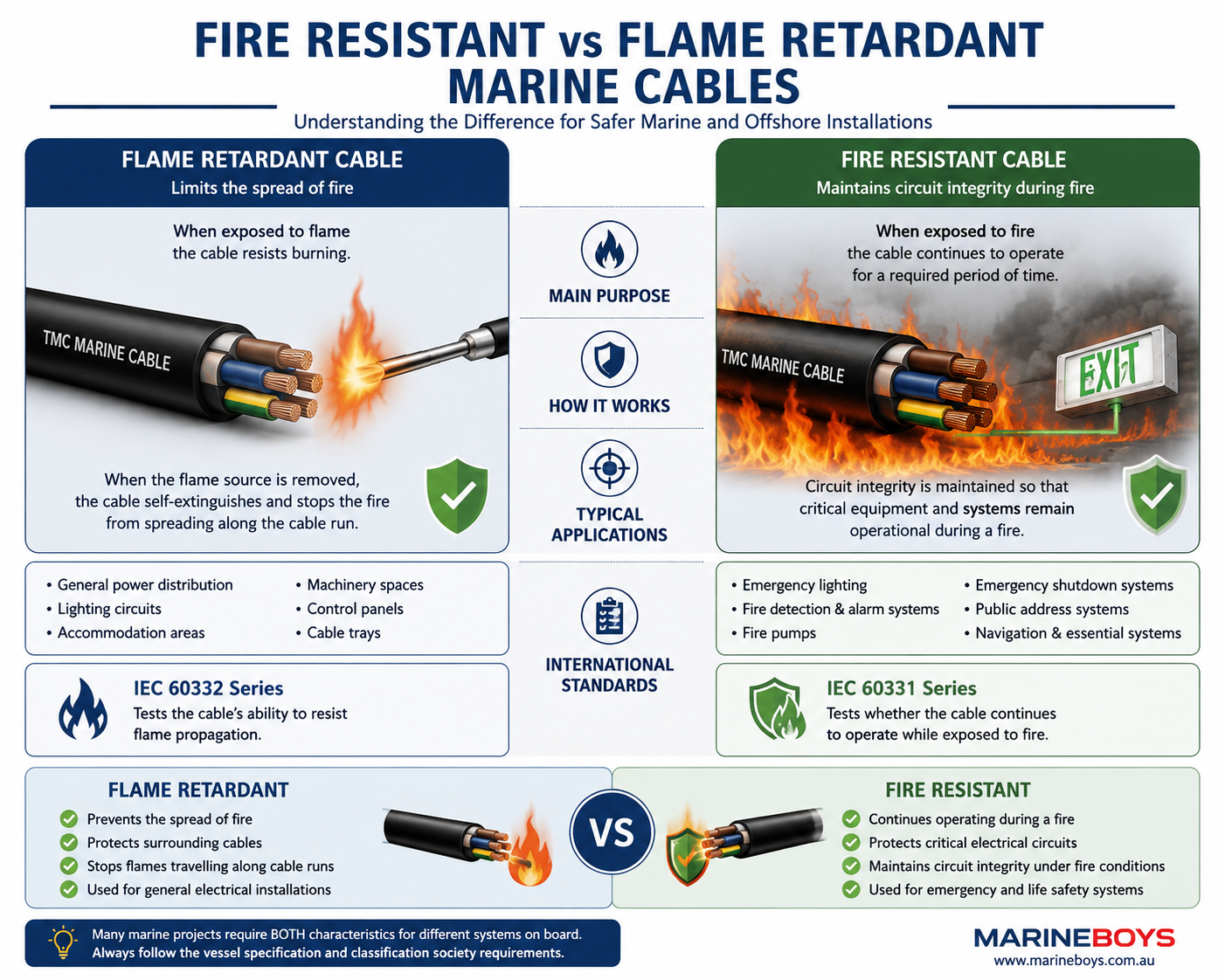
A flame retardant cable is designed to limit the spread of fire. If exposed to a flame, the cable's outer sheath and insulation resist burning and help prevent the fire from travelling along cable routes.
Once the external flame source is removed, the cable is designed to self-extinguish.
Typical Applications
General power distribution
Lighting circuits
Accommodation areas
Machinery spaces
Control panels
Cable trays
Benefits
Reduces fire propagation
Helps protect adjacent cables
Minimises damage to onboard electrical systems
Suitable for most non-emergency circuits
What Is a Fire Resistant Marine Cable?
A fire resistant cable is designed to continue carrying electrical power during a fire for a specified period of time.
Even when exposed directly to flames, the cable maintains circuit integrity so that essential safety equipment remains operational.
Typical Applications
Emergency lighting
Fire detection and alarm systems
Emergency shutdown systems
Fire pumps
Public address systems
Emergency communication systems
Navigation and essential control systems
Benefits
Maintains power during fire emergencies
Supports evacuation and firefighting operations
Improves vessel safety
Helps meet SOLAS and classification society requirements
The Key Difference
Flame RetardantFire ResistantPrevents the spread of fireContinues operating during a fireProtects surrounding cablesProtects critical electrical circuitsStops flames travelling along cable runsMaintains circuit integrity under fire conditionsUsed for general electrical installationsUsed for emergency and life safety systems
Many marine projects require both characteristics, particularly for essential services.
International Standards
Marine and offshore cables are commonly tested to internationally recognised standards, including:
Flame Retardant
IEC 60332 series
Tests the cable's ability to resist flame propagation.
Fire Resistant
IEC 60331 series
Tests whether the cable continues to operate while exposed to fire.
Depending on the vessel type and application, additional standards and classification society requirements may also apply.
Why Low Smoke Halogen-Free (LSHF) Matters
Modern marine cables are often manufactured with Low Smoke Halogen-Free (LSHF) compounds.
Compared with conventional PVC cables, LSHF cables provide several important safety advantages during a fire:
Lower smoke generation
Reduced toxic gas emission
Improved visibility for evacuation
Less corrosive damage to electrical equipment
These characteristics are particularly important on passenger vessels, offshore platforms, naval ships, and enclosed machinery spaces.
Which Cable Should You Choose?
Consider the purpose of the circuit:
Choose Flame Retardant Cable for:
General shipboard power
Lighting
Distribution circuits
Standard control wiring
Choose Fire Resistant Cable for:
Emergency systems
Fire protection equipment
Alarm systems
Emergency communications
Essential navigation equipment
When in doubt, consult your vessel's electrical specification, classification society requirements, or equipment manufacturer.
Quality Matters
Marine electrical systems operate in harsh environments involving vibration, humidity, salt spray, oil, and temperature extremes. Selecting high-quality marine cables from an established manufacturer helps improve reliability, reduce maintenance, and support long service life.
Marineboys supplies genuine TMC marine and offshore cables suitable for a wide range of shipbuilding, repair, and offshore applications.
If you are unsure which cable is appropriate for your project, our team can assist with product selection based on your technical requirements.
Fire Resistant vs Flame Retardant Marine Cables: What's the Difference?

Fire resistant and flame retardant marine cables perform different safety functions. Learn which cable is required for emergency systems and general shipboard installations.

Read more → https://www.marineboys.com.au/blog/fire-resistant-vs-flame-retardant-marine-cables

#TMCCable #MarineCable #FireResistantCable #FlameRetardantCable #ShipboardCable #OffshoreCable #IEC60331 #IEC60332 #LSHFCable #MarineElectrical #SOLAS #Marineboys
Copy the caption, click Open LinkedIn, paste, and attach the cover image.